
4 min read
QA
Vibe Coding Week Participation Report: 3 Automation Tasks for QA Workflow Improvement

Introduction
I'm okapi from the Mobile team in the QA Group.
"How much can we boost development productivity using generative AI in one week?" With that challenging spirit ignited, the QA Group also joined the internal event Vibe Coding Week, and I'm writing this article to share our experience.
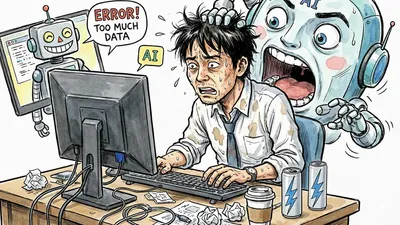
By the way, the cover image for this article was also created using AI.
What is Vibe Coding?
Vibe Coding is a new development style where human engineers collaborate with generative AI.
AI takes on heavy tasks like code generation and research, while humans focus on quality verification and improvement, which enables high-quality and efficient development.
Maximizing the power of AI while delivering value that only humans can provide—that's what the Vibe Coding Week is all about. During this week, we experience the limits and potential of the AI use to deepen the team's understanding of AI adoption.
What Does QA Do?
Does development productivity really relate to QA? Some of you might have thought such question.
The QA Group actively works on automation, workflow improvement, and AI utilization every day.
Obtaining the know-how cultivated through daily work, we decided to take on this Vibe Coding Week challenge.
I participated as a representative of the QA Group.
Starting one month before the event, we held weekly meetings and thoroughly discussed how we can deliver results.
As a result, we decided to implement three automation tasks to make QA work easier!
The 3 Automation Tasks We Tackled
One of the QA team members will write detailed articles about the automation to create used vehicle data and to compare a screen design on specification with an actually developed screen. Please look forward to the article release.
| Challenge | Overview | Effect |
|---|---|---|
| 1. Major version upgrade of Appium Library | Updated the Appium library used for test automation by the QA Mobile team by two major versions (java-client: 7.6.0 → 9.0.0). Leveraged AI to accelerate release note research, modification task creation, and implementation, while updating compatible peripheral libraries simultaneously. | Improved maintainability. Now able to use the aShot library (pixel-perfect comparison) compatible with screen comparison planned for future Appium automation! https://github.com/pazone/ashot |
| 2. Used vehicle data creation automation | Automated the creation of used vehicle data needed for testing by the QA Web Team using Playwright | Previously, creating data for 200 vehicles took about 2 months, but automation reduced the team's workload. Freed from the tedious manual task! |
| 3. Comparison automation between screen design on specification and actual screen | Automated the comparison between screen design on specification in Excel and actually developed screen with VS Code that used to be done manually by the QA Web Team. Automated a process from extracting texts from specifications, identifying differences between design on specification and actual screen, and displaying where the differences are identified. | Reduced verification time during the test phase. Differences that used to be checked visually can now be identified instantly! |
Team Members' Impressions
| Member | Impression |
|---|---|
| Oshima-san | I was able to present what we had been constantly working on and expect it to be applied for actual projects. It was also good to be able to utilize AI in regular work. |
| Lu-san | The deliverables from this time seem useful for future project work. |
| Kobayashi-san | By using ClaudeCode, Copilot, and Devin respectively, I was able to grasp their performance differences to some extent. Whichever I used, the speed of research and implementation is definitely faster than manual work. |
| Pann Nu-san | I used GitHub Copilot to build an MCP server, which brought me an opportunity to deepen my understanding of Figma-related topics and complete all the work. I'm very satisfied. |
| Oka | Thanks to everyone's thorough preparation from the start, all three teams were able to deliver results, so it was a great event. |
Results and Learnings
AI utilization increased the speed and accuracy of research and modification tasks.
Automation reduced workload, allowing humans to focus on more important quality assurance and test design.
We were able to make improvements that we couldn't normally tackle in a short amount of time. This contributed to forming a corporate culture where we automate routine tasks by leveraging AI.
Conclusion
In this Vibe Coding Week, we implemented three tasks aimed at automating and improving efficiency of QA work, achieving significant results in a short term.
The one month of preparation paid off, and we sprinted at full speed during the event.
The know-how gained from this experience should greatly benefit our future QA work.
We will continue to promote automation, workflow improvement, and AI utilization continuously, and keep addressing various challenging tasks.

関連記事 | Related Posts






We are hiring!
Follow Us



KINTOテクノロジーズの最新情報をSNSで発信中!イベント・テックブログ更新情報もお届けします。