
3 min read
General
Improving the Master Data Management of KINTO FACTORY


This summary was generated by AI. Please refer to the article for accurate details.
Read the summary
We reduced input errors by about 75% by simplifying the Excel format and adding input rules. We removed unnecessary items and duplicates, which cut down on mistakes and made the data easier to manage. We built a Go-based tool to automatically convert Excel files to CSV, replacing manual work that used to take almost a full day. The tool now handles all the steps—reading, checking, and converting—without human intervention. It even supports updates when new items are added to the Excel file. As a result, what used to take hours of manual effort now takes just minutes. The tool eliminated human errors from the conversion process and freed up our team from needing to be Excel experts. Even with these improvements, communication between planning and development still takes time. We’re now exploring ways to streamline the input-to-verification process so that both teams can work faster and with less overlap. We’ve cut review time significantly and reduced input mistakes by 75%. The automation has made data handling faster and more reliable. But we still see room for improvement in how teams collaborate on data entry. KINTO FACTORY is now looking for new partners. If you're interested, check the job listings.
Introduction
Hello. I am Ito, and I do backend development and operation of the KINTO FACTORY service (hereinafter, FACTORY) at KINTO Technologies. As part of the Advent Calendar series about FACTORY, I will write about how we improved its master data management.
About the Master Data Management of KINTO FACTORY
Various types of information are stored as master data, including vehicle models, products managed by KINTO FACTORY, and details of dealerships capable of handling vehicle modifications offered by KINTO FACTORY. 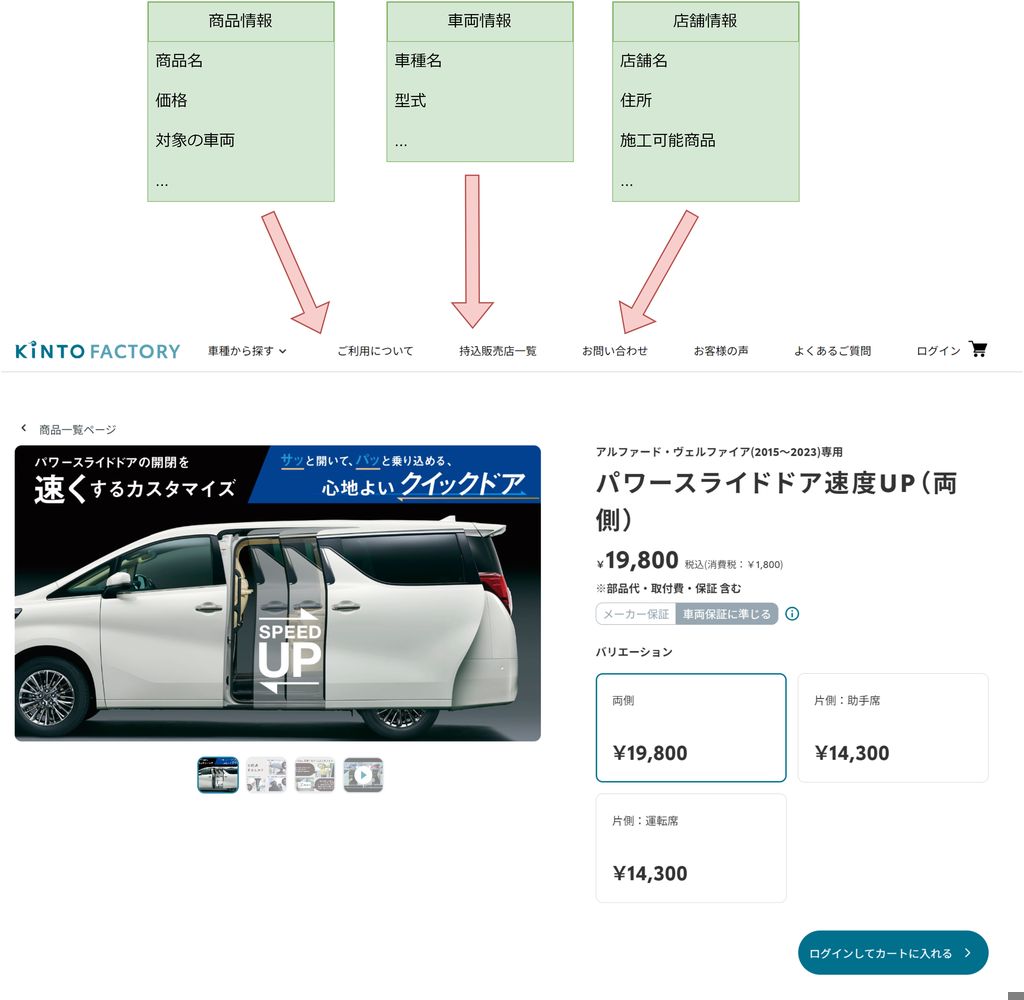 *Product prices are as of December 11, 2023. Albeit only in Japanese at the release of this article, you can check the KINTO FACTORY website for the latest prices.
The base information is provided by Toyota and its dealers in Japan, and the planning department enters it into Excel. After that, the Excel file is shared with the development team, converted to a CSV file, and registered in FACTORY.

It's a pretty hard operation
When it first started, there was a lot of frustration...
- Saving nearly ten Excel files as CSV files, converting newline characters, and deleting BOM was all done manually and took time and effort
- Excel functions were used to check the entered data, which made files heavy to work with...
- It was hard to make an Excel function for checking, so they needed to be checked by humans
- Item lists were long, some data was duplicated, and there were also input mistakes
- It required repeated checks and revisions in a checking environment, and it took a lot of workload

Improvement was needed
We made the following improvements to get rid those annoyances.
Review of the Excel Input Format
First, we reviewed the Excel format.
- Removed unnecessary items that were created for potential future uses
- Removed duplicates or items determined by other input values
- Added assisted input with Excel functions
We reduced the burden of inputs by removing unnecessary items and reduced input errors by about 75% by using Excel functions and input rules.
Automating the Excel-to-CSV conversion
Next, we developed a tool to convert Excel files into CSV files in Golang.

- We Automated the Excel reading, checking, and converting to CSV
- The number of Excel functions was optimized by using a tool to do checks that were done by Excel functions
- The tool developed in the Go language supports minor revisions even when items are added to an Excel file
By automating Excel-to-CSV conversions, we reduced the amount of effort needed and manual operation mistakes, and made it possible to complete tasks that used to take almost a day in just minutes. By making the tool do all of the work that we did mabually in Excel, we were finally free from having to dedicate our time into just being Excel experts! (Personally, this was my favorite part)
Summary
In this article, I shared about how we improved the master data management of FACTORY. We reduced out time spent reviewing Excel formats, automating conversions to CSV files, and reducing input mistakes. However, we still are facing issues. In particular, communication between planning and development takes up time no matter what we do, so we are thinking of changing the input-to-verification environment in order to streamline the checking process. We will continue to improve our master data management and provide an even better service.
Conclusion
KINTO FACTORY is looking for new partners. Please check the job listings below if you're interested!

関連記事 | Related Posts



We are hiring!
【Java/Python】事業や組織の成長に携わるプロダクトエンジニア(AWS環境)/KINTO CXシステム開発G/東京・名古屋
KINTO CXシステム開発グループについてTOYOTAのクルマのサブスクリプションサービスである『 KINTO 』を中心とした国内向けサービスのプロジェクト立ち上げから運用保守に至るまでの運営管理を行っています。大手EC、SIer、ベンチャー、Webサービス企業など、さまざまなスペシャリストが集まり、KINTOサービスを開発しています。
【シニアソフトウェアエンジニア】業務システムG/東京
業務システムグループについて TOYOTAのクルマのサブスクリプションサービスである『 KINTO 』を中心とした国内向けサービスのプロジェクト立ち上げから運用保守に至るまでの運営管理を行っています。
Follow Us



KINTOテクノロジーズの最新情報をSNSで発信中!イベント・テックブログ更新情報もお届けします。